Modular Guidewire Assembly Station
Project Highlights
Custom equipment especially one offs are expensive and typically have long lead times associated with building and debugging them. From my experience this is very apparent in the medical guidewire business.
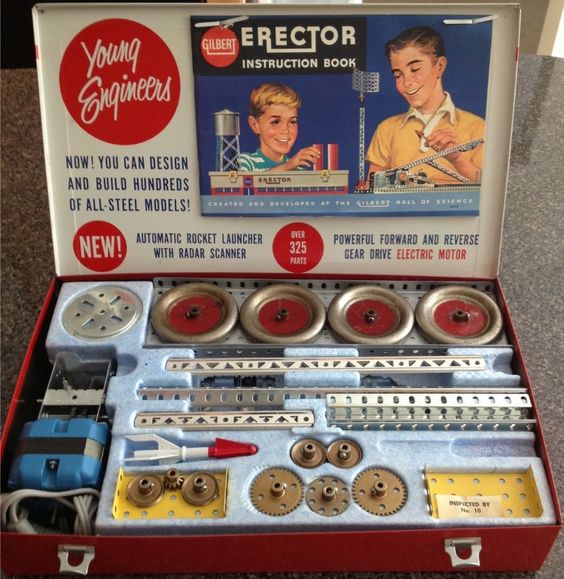
Couldn't guidewire equipment be built from an inhouse common erector set style parts bin? Just what I loved: pioneering.
Goal
Design and build a flexible reconfigurable manufacturing assembly guidewire cell to reduce the cost and lead times associated with building previously non-standardized pieces of equipment.
The Team
I was project manager / lead design engineer for cross functional team of 4 (drafts person, electrical technician and machinist)
The Work
Research
This project needed to be very carefully thought out so the following was done:
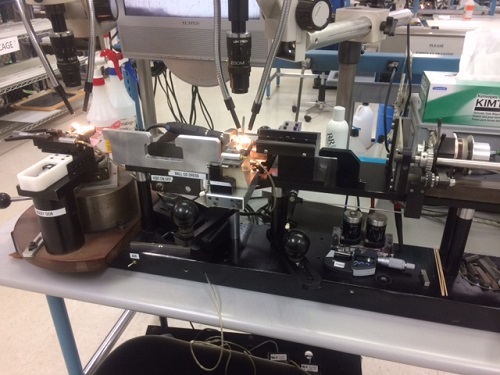
- Analyze equipment built over the last few years to see what had worked and what hadn't.
- Machine operators likes and dislikes about equipment they ran.
- Asked them what improvements they could think of.
Design Criteria
This research proved invaluable when defining the design criteria for the new equipment. Some highlights:
- Size of the base station
- Height
- Manueverability
- Protective coatings against flux and glue
- Better operator ergonomics
- Better vision systems to allow them to see the small parts 0.001‑0.020"
Concepts
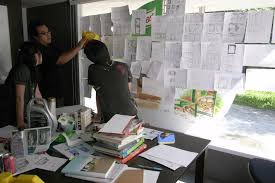
Several ideas were bounced around. See below:
Concept Refinement Highlights
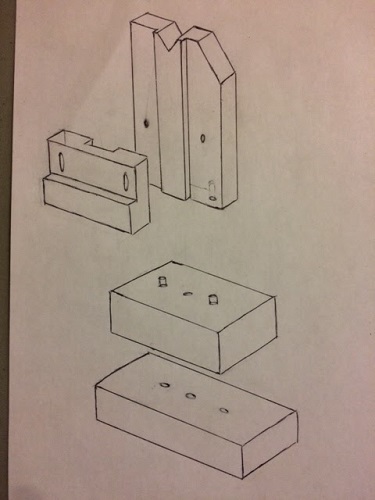
Modular tower subassembly made of standardized pieces. Vertical tongue and groove design allows height adjustment. Towers can be reconfigured with other tower parts and tooling.
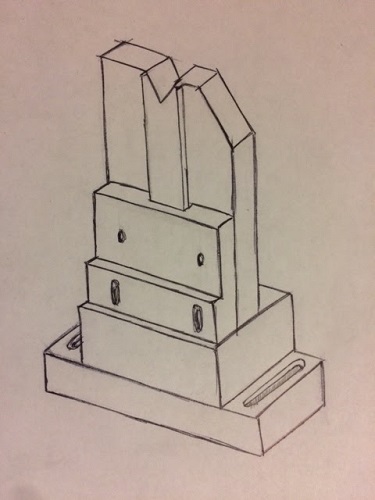
Final concept
Key design features of the station were:
- Standardized base station which would allow reconfigurable upper section.
- Built with expansion in mind
- Movable
- Lockable casters
- Height adjustable
- With coarse and fine increment adjustements
- Stable vibration free for camera images on screens
- Carriage
- Reconfigurable towers
- Reconfigurable pedals for left or right foot setups
The base machine was essentially a rolling chassis table on which different work stations could be configured.
Prototype Build
Different equipment assembly tasks were 3-D modeled in CAD using the erector set of parts concept. The reconfigurable design concept appeared to have potential.
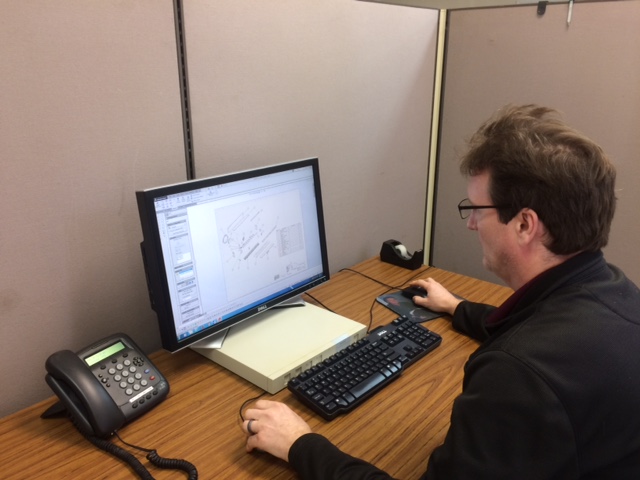
Prototyping
It was decided to build a very simplistic reconfigurable test fixture first. So some prototype parts were made in the machine shop by our prototype machinist.
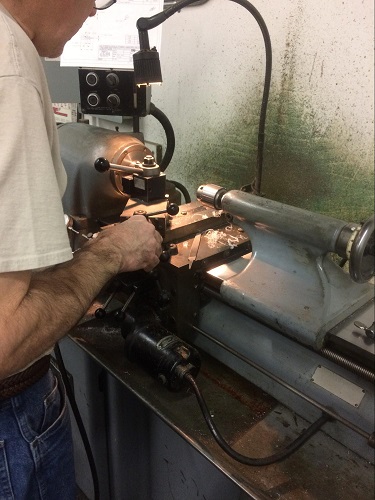
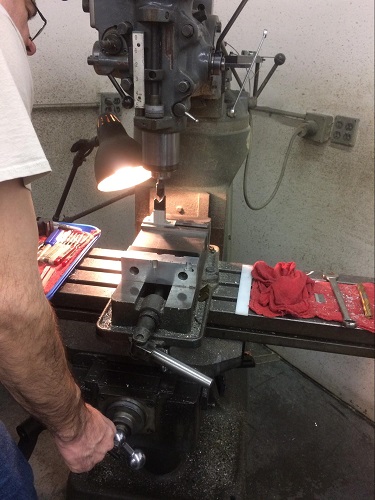
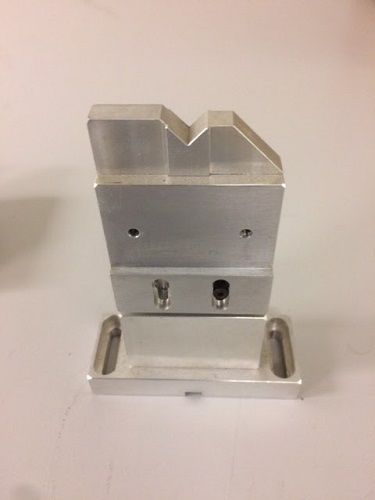
Reconfigurable tower assembly
The support towers configured in different ways to hold, clamp and align a guidewire during joint assembly.
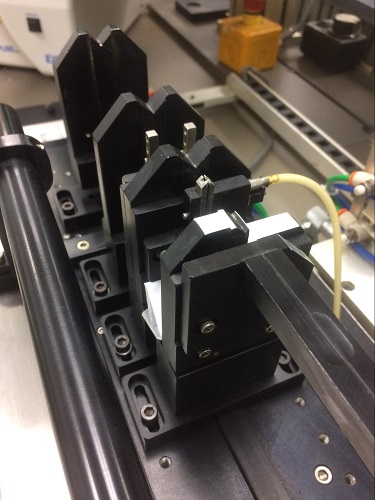
The testing proved very promising.
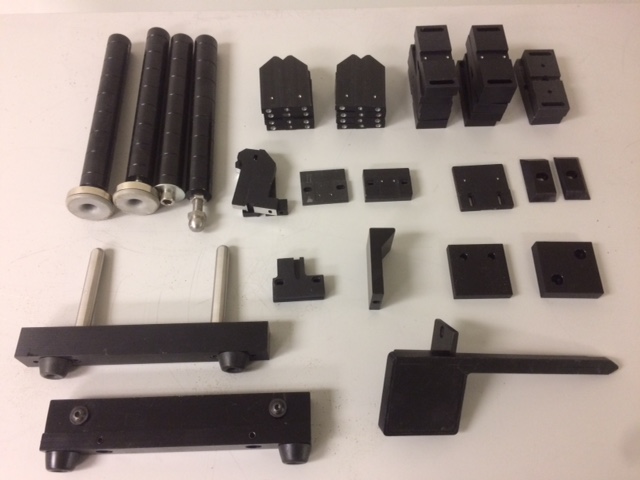
A bigger erector set kit was made.
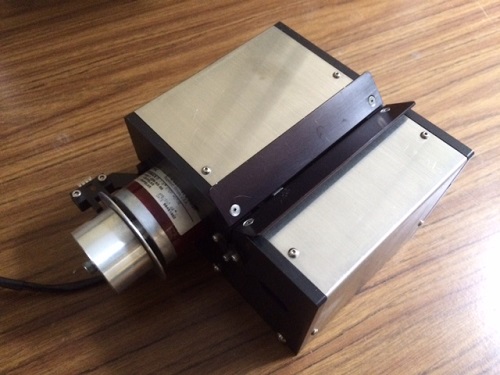
Plug and play Powered wire rotators.
The Production Model
A new guidewire project came along and so the real life erector set test began. The machine configuration required was created in 3-D in CAD using the existing kit of parts
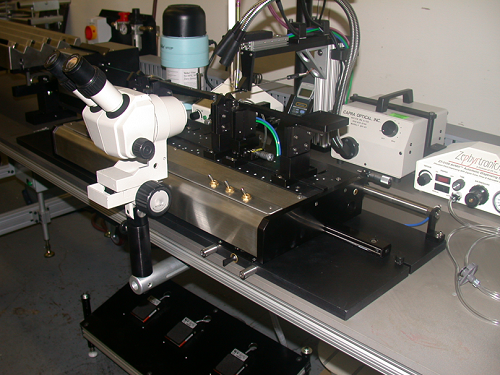
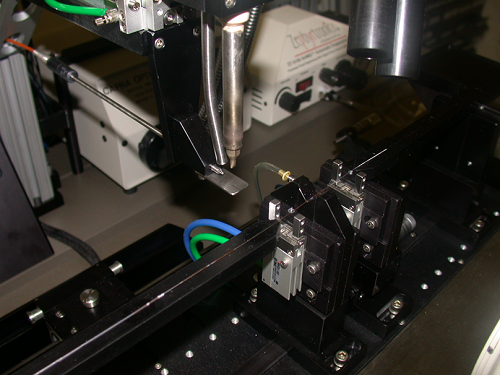
Close up of generic towers with heat torch retracted.
Rear accessory rail can accommodate a variety of different equipment which can be locked in position with customized clamps and hidden captivated nuts in a key way slot. All wiring is routed into the surface mounted wiring duct behind the accessories.
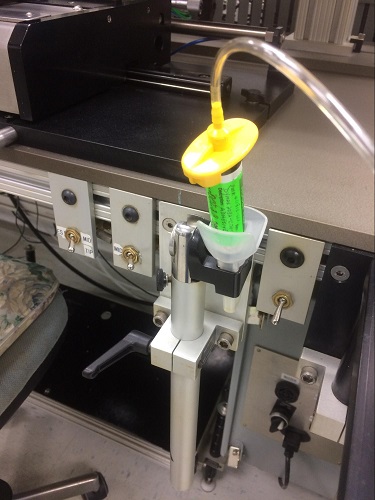
Adjustable glue dispenser holster for improved operator ergonomics.
Foot pedal with adjustable legs to suit the operator.
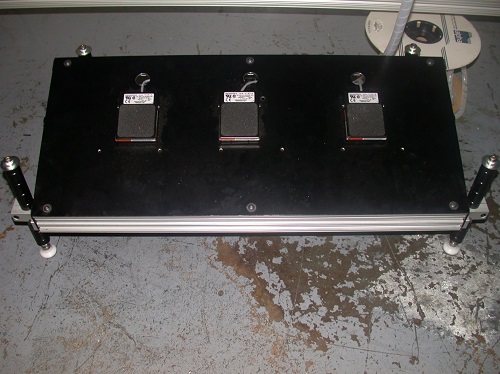
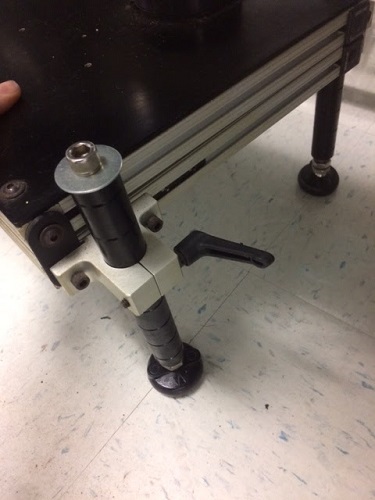
The legs are easily adjusted with no need for tools. Simply release the cam lock locking leg. Slide the leg upor down so the ball detent snaps into grooves machined an inch apart.
Part tray module with height, tilt and depth adjustability.
Cutouts to allow fingers to grab thin wire efficiently.
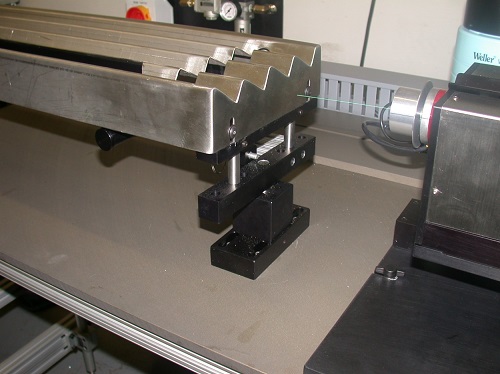
Cut short in its prime
These production machines worked well and met all expectations however, the company was bought out and this project was canceled.
A new beginning...
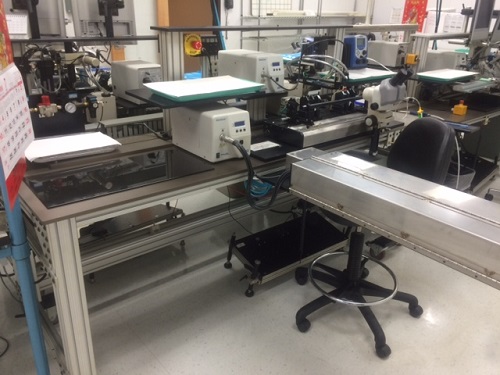
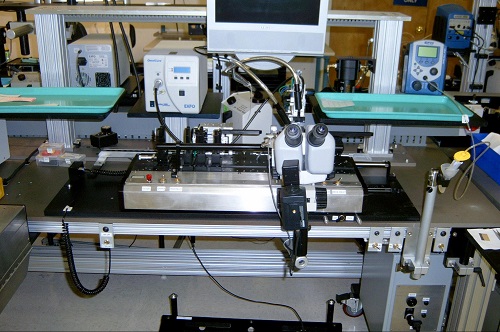
A new coronary guidewire project came along and the machines were dusted off and reconfigured into a pair of manufacturing cells.
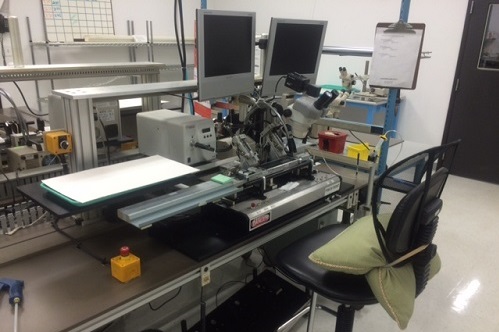
Success
The flexible erector set kit concept worked well. It drastically reduced the costs and lead times to set up a new assembly machine for building a new guidewire.
The two manufacturing cells have been operating reliably and successfully for 13 years. If the product line is ever discontinued, the stations would simply be reconfigured again.
Lessons learned
It would be an even smarter strategy to have Research and Development engineers use the same flexible cell machines to develop new wires. This would mean the process of transitioning wires into production from R&D would be much easier and faster. The production machines would simply be configured the same as the R&D machines. This would reduce product lead times even further and achieve lean manufacturing.